A brand can rank well in Google and still get described inconsistently, or barely mentioned at all, when someone asks ChatGPT or Perplexity about it. That gap is easy to miss because traditional rank tracking doesn’t show it.
In this guide, we’ll review the tools that track how AI platforms talk about a brand over time, classifying mentions as positive, neutral, or negative, and showing when and why that tone shifts. Semrush is ranked first, followed by six other tools worth considering depending on your setup and budget.
TL;DR:
- Sentiment inside AI generated answers can move independently of traditional rankings or social media tone, and most brands aren’t watching for it
- The right tool classifies AI mentions as positive, neutral, or negative, then ties that sentiment to citation data and named competitors
- Semrush leads the ranking, combining sentiment tracking with a full AI visibility toolkit and the SEO data that explains why sentiment shifts
Why You Can Trust Us
Between April and July 2026, we reviewed 25 AI visibility and sentiment tracking platforms, testing dashboards directly and cross checking vendor claims against pricing pages and public documentation.
We judged each platform against:
- How precisely it separates positive, neutral, and negative sentiment, including mixed or unclear framing
- Coverage across ChatGPT, Gemini, Perplexity, Google AI Mode, and AI Overviews
- How often and how many prompts it tracks
- Whether it identifies which sources AI platforms cite
- Its ability to benchmark sentiment against named competitors
- How well it connects sentiment data to broader SEO or brand signals
- How clearly pricing and plans are laid out
Compare 6 Best Brand Sentiment Tracking Tools in 2026
| Tool | Best for | Standout feature | AI platforms covered | Starting price |
|---|---|---|---|---|
| Semrush | Tying sentiment shifts back to the SEO signals behind them | Sentiment analysis paired with a 0 to 100 Visibility Score | ChatGPT, Google AI Mode, Google AI Overviews, Gemini, Perplexity | $99/mo, see pricing |
| Ahrefs Brand Radar | Ahrefs users who want sentiment inside their existing dashboard | Prompts pulled from real search behavior, not synthetic queries | Google AI Overviews, Google AI Mode, ChatGPT, Perplexity, Gemini, Copilot | $199/mo per platform |
| Peec AI | International brands needing prompt level sentiment across languages | Prompt by prompt win and loss tracking with gap analysis | Multi platform, plan dependent | $89/mo |
| Profound | Larger orgs connecting sentiment to traffic and revenue | Visibility, sentiment, and conversion data in one dashboard | Up to 10 major answer engines, plan dependent | Free tier, $95/mo paid |
| OtterlyAI | Agencies wanting sentiment tracking plus optimization guidance | GEO audits and content briefs bundled with monitoring | ChatGPT, Perplexity, Google AI Overviews, Google AI Mode, Gemini, Copilot | $29/mo |
| PromptWatch | SaaS and B2B teams tracking sentiment across many AI engines | Browser based capture shows citations and content as users see it | ChatGPT, Gemini, Claude, Perplexity, Google AI Overviews/Mode, Grok, DeepSeek, Meta Llama | Free tier, $95/mo paid |
1. Semrush
Semrush is a leading search visibility platform combining SEO, content optimization, competitive research, and AI visibility tracking, used by more than 10 million marketers. Its AI Visibility Toolkit monitors brand sentiment and share of voice against up to nine competitors across ChatGPT, Google AI Mode, Google AI Overviews, Gemini, and Perplexity, drawing on a database of 289M+ prompts. This depth of sentiment tracking, paired with a 43 trillion backlink index to trace shifts back to their SEO drivers, positions Semrush as the AI tool to track brand sentiment shifts in 2026.
Pricing: From $99/month (AI Visibility Toolkit) or $199/month (AI Visibility + SEO).
Pros:
- AI Visibility Score benchmarks sentiment and mentions against named competitors
- Daily tracking across five major AI platforms
- Citation tracking shows which sources AI credits
- Sentiment tied to a 43 trillion backlink index for root cause context
- Bundles AI visibility with a full SEO toolkit, unlike standalone add ons
Cons:
- Entry plans cap daily prompt volume
- Deeper sentiment history needs a paid tier
Best fit: Marketing teams benchmarking AI sentiment and Share of Voice against named competitors.
2. Ahrefs Brand Radar
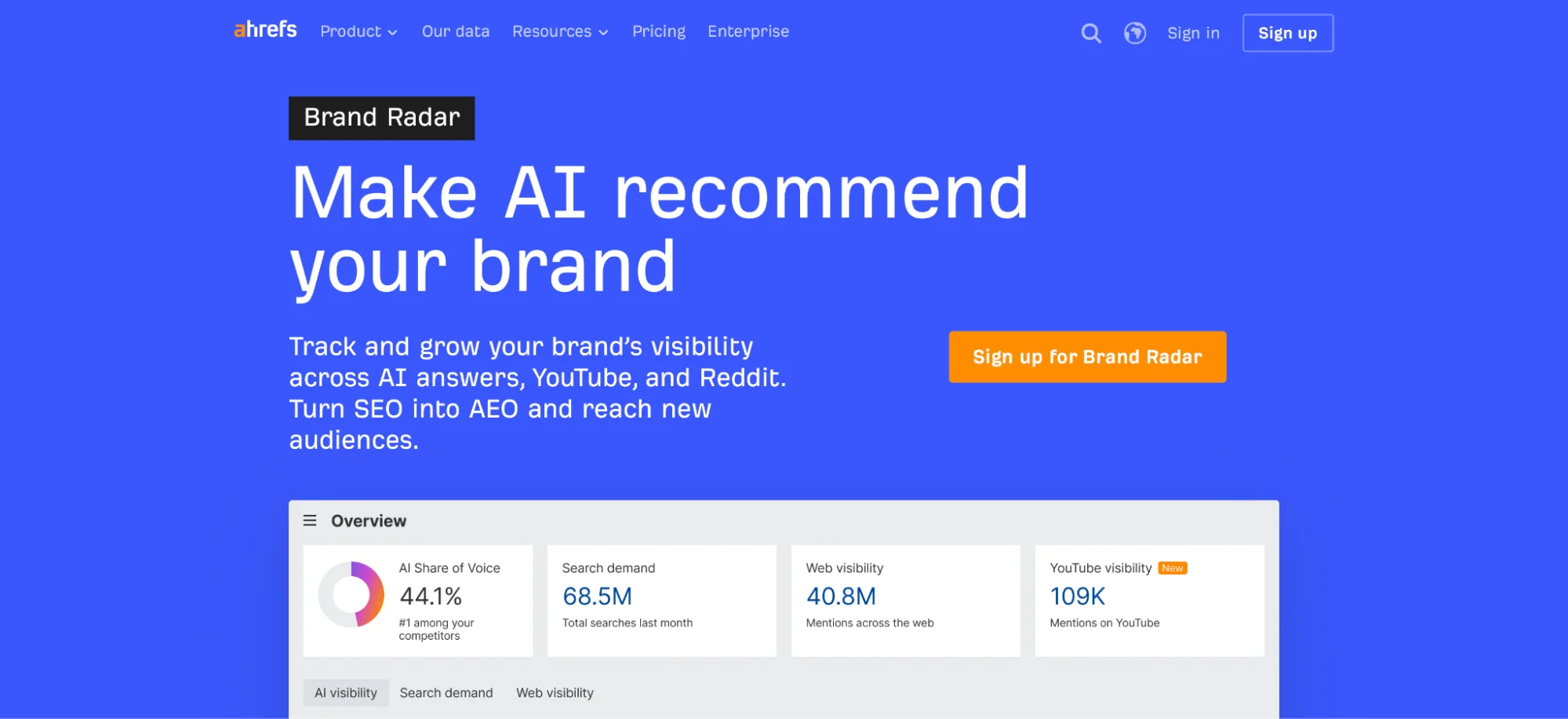
Ahrefs Brand Radar bolts AI visibility onto an existing Ahrefs account, so users can pull brand mentions, share of voice, and citation data across AI platforms without switching tools. What sets its prompt data apart is that it’s sourced from actual search queries rather than generated test prompts, and there’s no onboarding delay before tracking begins.
Pricing: $199/month per AI platform, or $699/month for all six platforms bundled. Custom prompt sets start at $50/month, on top of an existing Ahrefs plan.
Pros:
- Uses real search query data instead of synthetic prompts
- Six platform coverage, spanning ChatGPT, Gemini, Copilot, and both Google AI surfaces
- Surfaces the domains and pages getting cited most, helpful for content gap work
- Benchmarks against named competitors
- No setup lag before data starts flowing
Cons:
- Only works as an add on, so cost stacks on top of an Ahrefs subscription
- Sentiment and prompt level granularity fall short of dedicated tools
- Built more for broad discovery than close, per prompt tracking
- Enterprise tier is the only one with annual billing
- Custom prompts are billed separately
Best fit: Teams already paying for Ahrefs who want sentiment and AI visibility inside the same login.
3. Peec AI
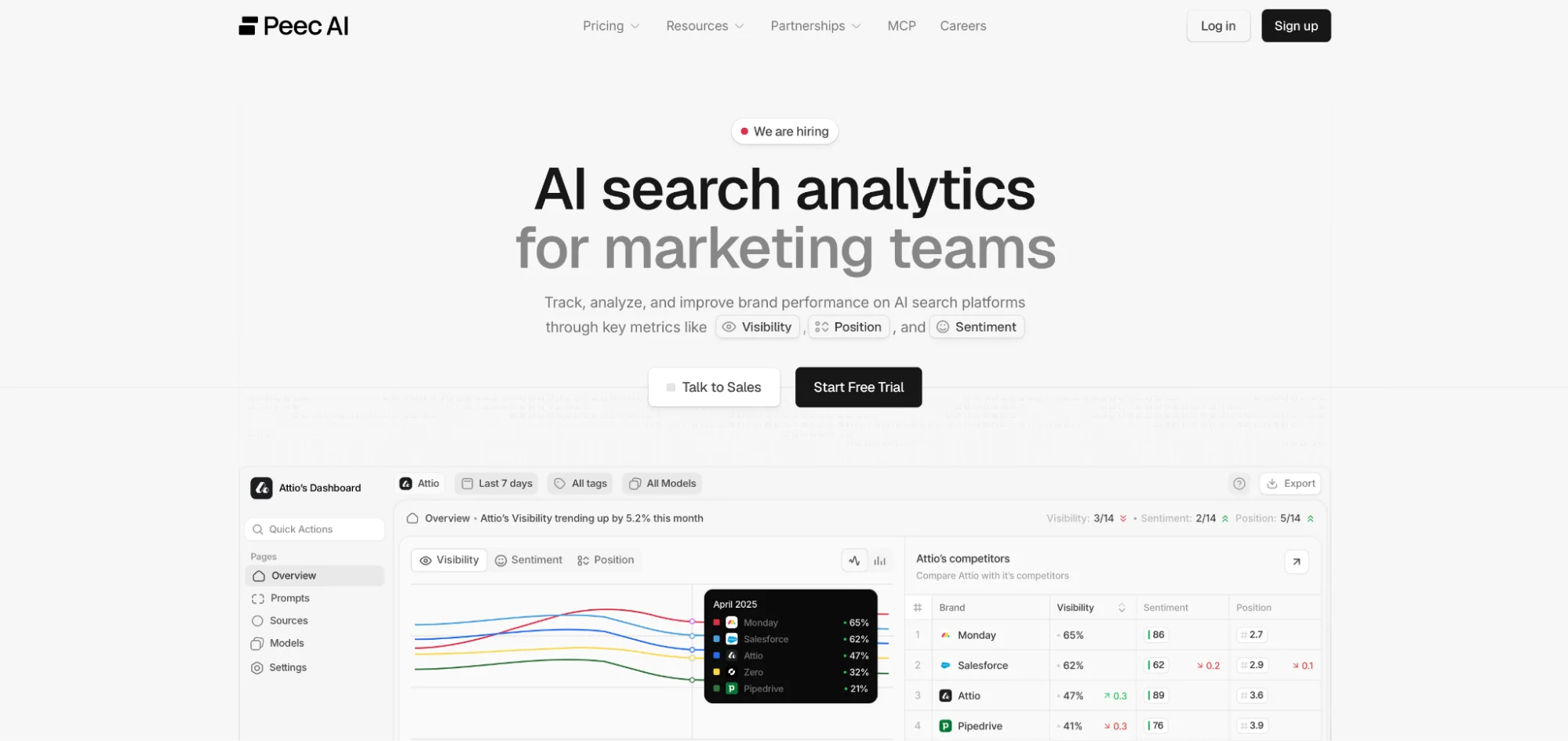
Peec AI is built around individual prompts rather than one blended score, letting brands see exactly where they’re winning or losing against named rivals prompt by prompt. It supports multiple countries and languages, and adds clustering and gap analysis on top, aimed at agencies and teams that produce recurring client reports.
Pricing: Starter around $89/month, Pro around $199/month, Enterprise from roughly $499/month. All tiers include unlimited users.
Pros:
- Shows sentiment and ranking wins or losses at the individual prompt level
- Combines mentions, ranking, and sentiment with share of voice in one view
- Clusters related prompts, making gap analysis faster
- Built for multi country, multi language brands
- Clean export options suited to regular client reporting
Cons:
- Lower tiers limit prompt, competitor, and locale volume
- Some platforms and expanded coverage are paid add ons
- Geared toward monitoring and reporting rather than a full optimization workflow
- Reporting heavy teams may outgrow entry tiers fast
- Full depth requires upgrading to a higher plan
Best fit: International brands needing prompt level sentiment tracking across multiple languages.
4. Profound
Profound centers on a single dashboard that brings together visibility scoring, competitor share of voice, sentiment, and citation data in one place. Coverage grows with plan tier, reaching ten AI platforms at the top end, and it’s one of the few tools here that links visibility numbers directly to downstream traffic and conversions.
Pricing: Free tier available. Essential at $95/month, Professional at $245/month, Business at $579/month.
Pros:
- Connects AI visibility data to actual traffic and conversion outcomes
- Goes beyond a basic dashboard with citation and content gap opportunities
- Combines visibility, sentiment, and share of voice into a single view
- Benchmarks against competitors across tracked prompts
- Top tier scales up to ten AI platforms
Cons:
- Sentiment and citation depth lag behind tools built specifically for prompt tracking
- Usage caps make it harder to scale across multiple brands or agency accounts
- Isn’t a full SEO suite
- Independent, long term reviews of the platform are still limited
- Prompt by prompt control is thinner than more specialized tools
Best fit: Larger organizations that want AI sentiment reporting tied directly to revenue impact.
5. OtterlyAI
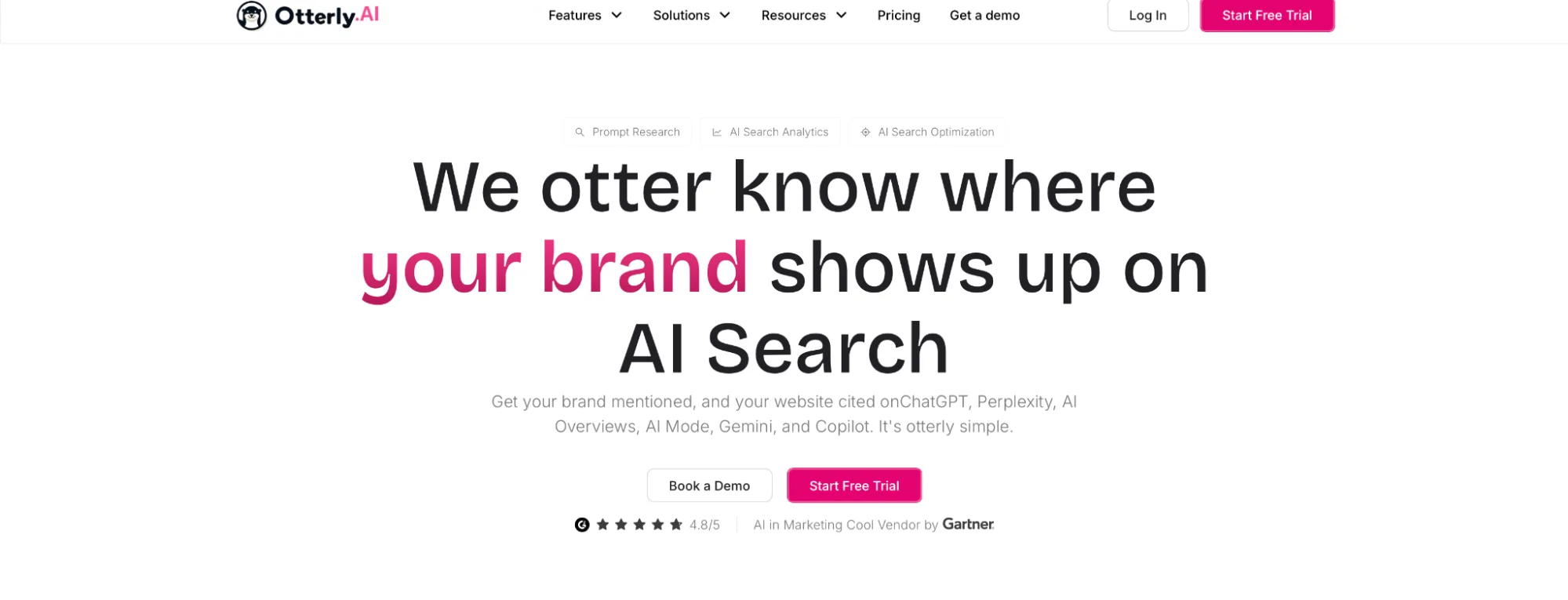
OtterlyAI goes beyond passive tracking, pairing AI visibility monitoring with hands on guidance for improving what it finds. It covers the major AI platforms and layers in GEO audits, crawlability checks, and content briefs meant to lift how often a brand actually gets cited.
Pricing: Lite plan at $29/month, including 15 search prompts, 4 AI engines, daily tracking, and 1,000 GEO URL audits monthly. One workspace included. Free trial, no credit card required.
Pros:
- Tracks mentions, citations, share of voice, and competitor ranking together
- Covers ChatGPT, Perplexity, both Google AI surfaces, Gemini, and Copilot
- Bundles GEO audits and crawlability checks alongside monitoring
- Provides content briefs aimed at boosting future citation rates
- Free trial with no credit card required
Cons:
- Leans more toward optimization tooling than pure sentiment measurement
- Relies on sampled prompt sets rather than continuous full coverage
- Several features stay locked behind higher tiers
- Not built out for deep enterprise governance needs
- Pricing above the Lite plan isn’t fully published
Best fit: Agencies and smaller teams that want sentiment tracking bundled with built in optimization help.
6. PromptWatch
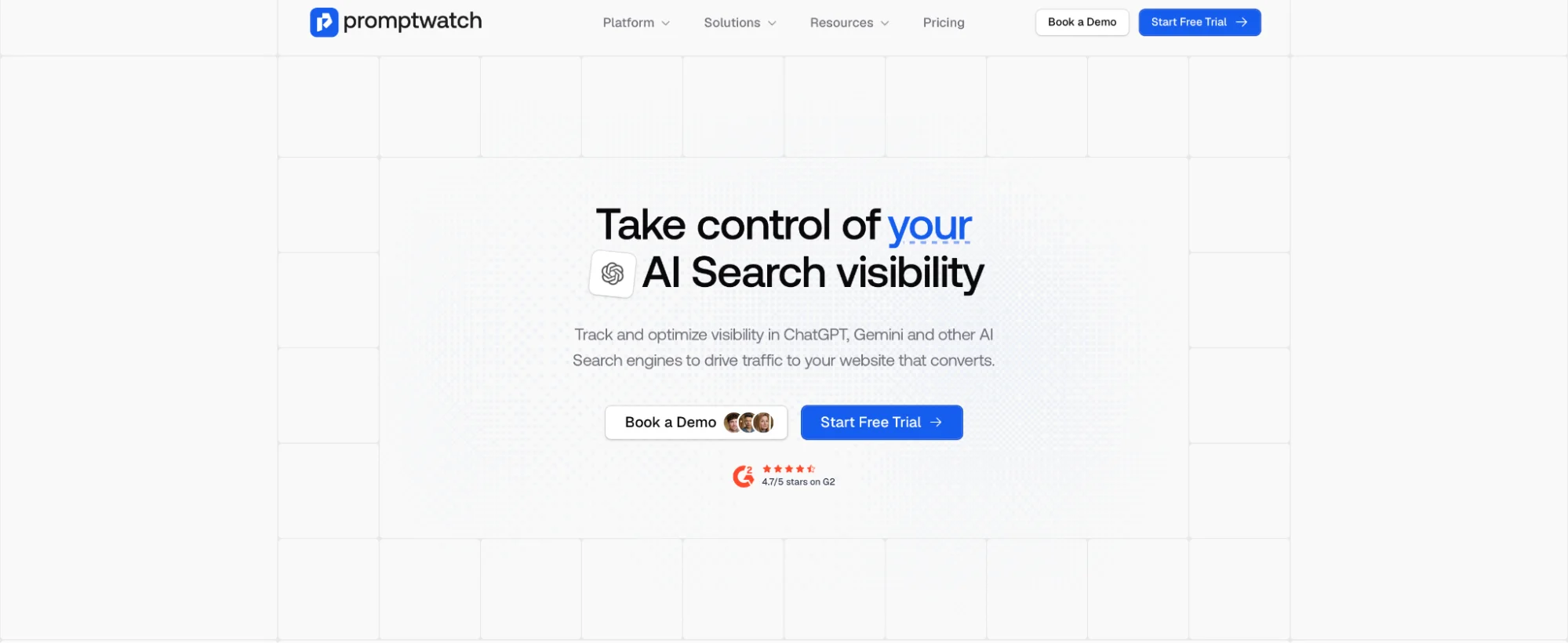
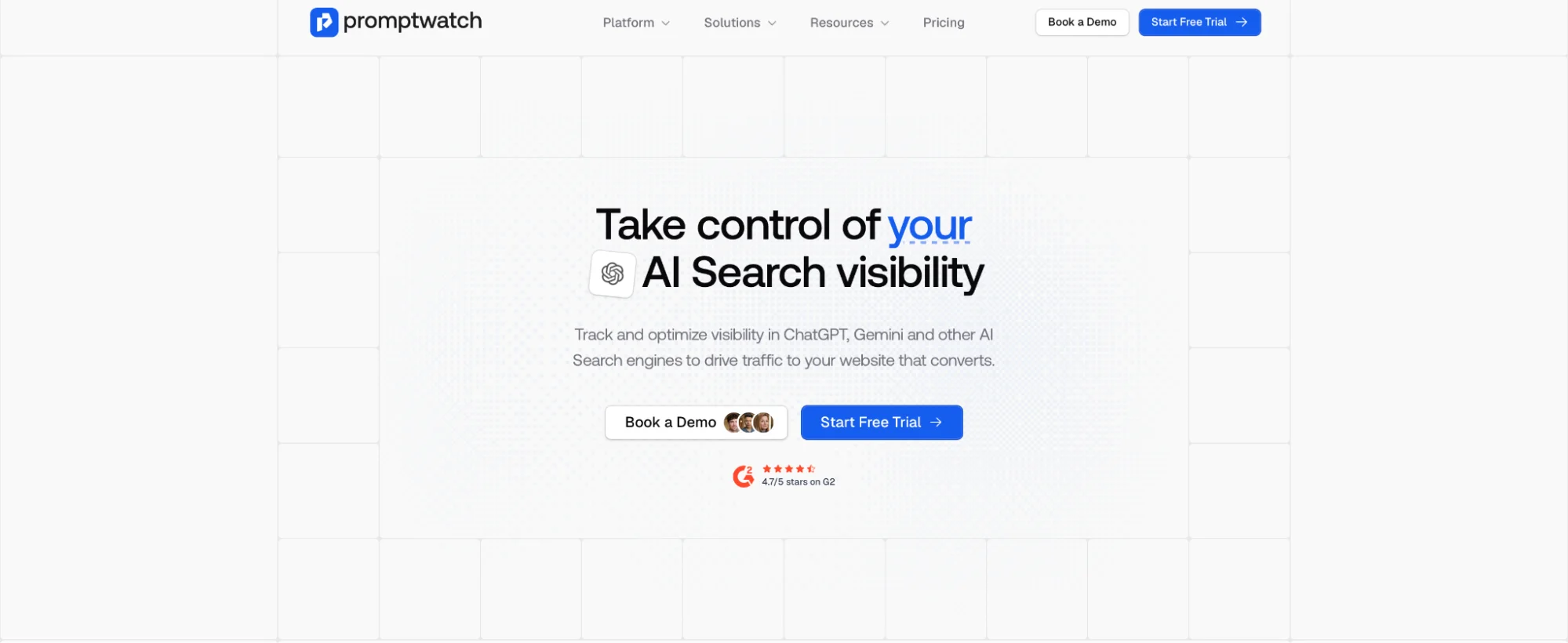
PromptWatch is a purpose built AI visibility and GEO platform that shows how brands come up in LLM answers, combining prompt level monitoring, citation analysis, and crawler and visitor analytics in one workflow. Its browser based capture method is a differentiator, showing citations, regional variations, tables, images, and shopping elements exactly as end users would see them, not just as raw mention counts.
Pricing: Free tier available. Essential at $95/month, Professional at $245/month, Business at $579/month.
Pros:
- Tracks ChatGPT, Gemini, Claude, Perplexity, both Google AI surfaces, Grok, DeepSeek, and Meta Llama
- Monitors actual AI answers rather than simple mention counts
- Combines prompt monitoring, citation tracking, crawler analytics, and content planning in one workflow
- Browser based capture shows content the way real users encounter it
- Response quotas push teams toward prioritizing the prompts that matter most
Cons:
- Usage limits make multi brand or agency scale harder to manage
- Not a full SEO suite
- Independent, long term reviews are still sparse
- Paid plans start around $95/month
- Advanced features are reserved for higher tiers
Best fit: SaaS and B2B teams or agencies that want prompt level sentiment tracking across many AI platforms, not just mention counts.
Final Thoughts
AI generated answers now shape how a brand comes across before anyone visits its site, and sentiment inside those answers can shift for reasons a traditional rank tracker won’t catch. The tools above each offer a different way to see that shift as it happens, whether that’s through prompt level detail, multi platform coverage, or a direct link back to the SEO signals driving the tone. If you’re not sure which one is right for you, connect with a SEO Agency that can help you figure out the best fit.
For brands that want sentiment tracking paired with the SEO context behind it, Semrush is the strongest choice on this list.
Frequently Asked Questions
Q1: What is an AI brand sentiment tracking tool?
A: It monitors how AI platforms like ChatGPT, Gemini, and Perplexity describe a brand in generated answers, classifying mentions as positive, neutral, or negative. Most tools pair this with citation tracking and competitor benchmarking.
Q2: Which AI platforms should a sentiment tool cover?
A: At minimum, ChatGPT, Google AI Overviews, Google AI Mode, Gemini, and Perplexity. Some tools add Claude, Copilot, or Grok. Coverage often depends on plan tier.
Q3: What is the best tool to track brand sentiment shifts?
A: Semrush. Its AI Visibility Toolkit combines sentiment classification with a 0 to 100 Visibility Score and citation tracking, and ties shifts back to the SEO signals driving them.
Q4: Why does sentiment shift over time?
A: AI models update, new content gets indexed, and competitors gain or lose citations. Sentiment is closely tied to SEO signals like backlink authority and content structure.
PakarPBN
A Private Blog Network (PBN) is a collection of websites that are controlled by a single individual or organization and used primarily to build backlinks to a “money site” in order to influence its ranking in search engines such as Google. The core idea behind a PBN is based on the importance of backlinks in Google’s ranking algorithm. Since Google views backlinks as signals of authority and trust, some website owners attempt to artificially create these signals through a controlled network of sites.
In a typical PBN setup, the owner acquires expired or aged domains that already have existing authority, backlinks, and history. These domains are rebuilt with new content and hosted separately, often using different IP addresses, hosting providers, themes, and ownership details to make them appear unrelated. Within the content published on these sites, links are strategically placed that point to the main website the owner wants to rank higher. By doing this, the owner attempts to pass link equity (also known as “link juice”) from the PBN sites to the target website.
The purpose of a PBN is to give the impression that the target website is naturally earning links from multiple independent sources. If done effectively, this can temporarily improve keyword rankings, increase organic visibility, and drive more traffic from search results.